
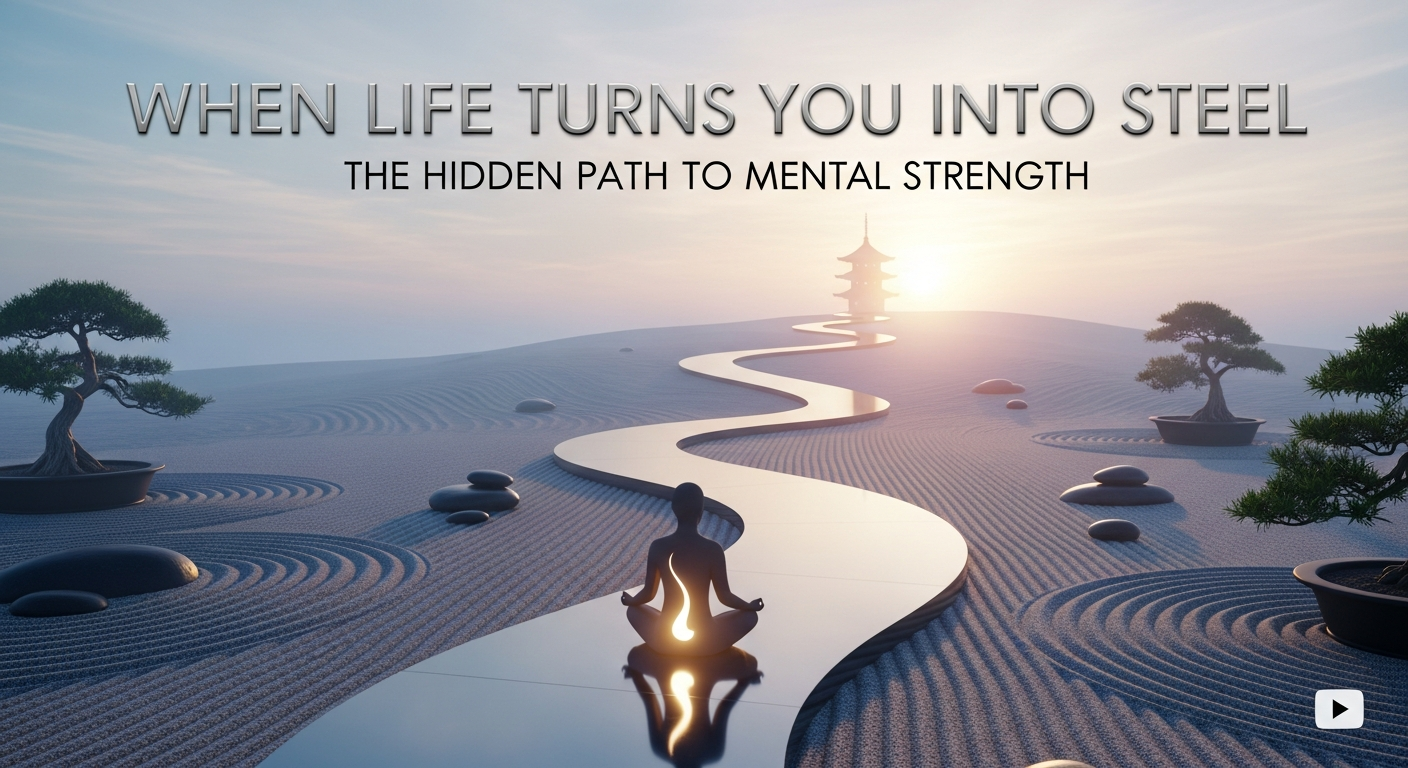
When Life Turns You Into Steel
Life is not trying to break you. Life is tempering you. Just as glass is heated and cooled until it becomes almost unbreakable, your mind and heart are strengthened through alternating waves of comfort and discomfort, praise and insult, gain and loss. :contentReference[oaicite:0]{index=0}
1. The Hidden Law of the Spiritual Path
The moment a person decides to rise higher in devotion, awareness, or inner truth, life rearranges itself. Circumstances begin to look “against” them. People may oppose, misunderstand, or mock them. Plans may suddenly fail.
This is not a sign that God has left you. It is a sign that your inner journey has really begun.
Every seeker is tested, not to be examined, but to be refined and made stable.
2. From Fragile Glass to Tempered Steel
Ordinary glass shatters with a small hit. But glass that has been heated and cooled again and again becomes so strong that even a bullet may not break it. In the same way:
Repeated phases of ease and hardship, respect and insult, gain and loss, quietly turn a fragile mind into a spiritually “bulletproof” mind.
This is why you face waves of resistance on the path. You are being tempered, not punished.
3. Why God Allows Loss, Insult and Difficulty
A natural question arises: “If God loves me, why does He allow such pain in my life?”
The deeper teaching is that God is not a bodyguard who removes every obstacle. God is a compassionate guide who uses certain obstacles to make you inwardly strong, fearless and surrendered.
Sometimes what you call “loss” is actually protection. Sometimes what you call “failure” is actually preparation.
4. True Gain vs. True Loss
The lecture points to a radical shift in perspective:
When you define gain as money, status, or comfort, then loss in these areas destroys your peace. But when you define gain as inner connection, then even outer loss becomes a doorway to depth.
Spiritual maturity begins when gain and loss stir the same calm center inside you.
5. The Saint and the Hundred Insults
A saint passed daily under the balcony of a wealthy man. That man insulted him and even spat on him again and again. The saint quietly bathed and continued his journey, day after day.
One day, the man’s heart broke open. He apologized, ashamed. The saint replied with gratitude, saying that what he normally received in a hundred days of sacred bathing, he had received in a single day of repeated insults and re-baths.
What was meant to humiliate actually elevated him.
This is the alchemy of a strong mind: insult becomes a ladder, not a wound.
6. Stop Chasing People, Start Seeing God
Instead of running after people to explain, correct or convince, the teaching invites you to shift your gaze: see the Divine presence sitting in every heart.
When you aim your feelings and prayers toward the One within the person, not the ego of the person, something subtle changes:
Fear reduces. Resentment softens. Courage and compassion quietly expand.
You stop being a puppet of others’ moods, and start responding to the Divine instead.
7. The Inner Battle: Desire, Anger, Greed & Attachment
The lecture describes inner enemies—desire, anger, greed, attachment, jealousy—as powerful generals of illusion. Alone, you cannot defeat them.
The strength to overcome them comes not from ego, but from surrender.
Like a child who feels safe because a loving parent stands behind them, you become fearless when you feel the Divine standing behind your mind and actions. Resisting temptation feels like fire at first, but that fire is purification.
Roasted seeds do not sprout; a mind roasted in discipline does not easily fall back into old patterns.
8. Hardship as Acceleration, Not Delay
It often feels like suffering delays your progress. The teaching reverses this idea:
Every insult endured deepens humility. Every frustration borne with remembrance deepens surrender. Every loss held gently deepens detachment.
From the soul’s perspective, your hardest seasons are often your fastest growth phases.
9. A Simple Check-In for Your Own Life
As you look at your current challenges, gently ask yourself:
“What if I am not being punished here? What if I am being prepared? What new strength, clarity or surrender might be forming in me through this?”
This simple reframing turns you from a victim of events into a conscious participant in your own inner evolution.
There are moments in life when the world feels as if it has turned against us—when circumstances tighten like a closing fist, when relationships grow cold, when our work becomes a battlefield, and when inner peace feels impossibly far away. In those moments, we often think we are being punished or abandoned. We wonder, Why is this happening to me? Why isn’t God protecting me? Why is everything turning against me?
But deep within the timeless spiritual teachings, there is a quiet principle—simple, powerful, and often misunderstood. A principle that says:
Life is not trying to break you.
Life is tempering you.
Just as iron is heated and cooled until it becomes unbendable steel, life moves us through cycles of comfort and discomfort, respect and insult, gain and loss, sweetness and bitterness, until the inner core becomes unshakeable.
This hidden law of becoming mentally strong runs through the story and spirit of saints, seekers, and warriors. The lecture you provided speaks of this principle in many vivid metaphors—how life puts us through alternating waves of adversity and relief, not to destroy us, but to bulletproof the heart so deeply that even the fiercest storms of existence cannot shake us.
Let us walk through this philosophy gently, in a narrative that feels like sitting beside a wise teacher who has seen life’s inner machinery and smiled at its mysteries.
The Illusion That Only “I” Suffer
One of the great misconceptions on the spiritual path is believing that we alone face adversity.
When life suddenly turns harsh—when colleagues become unfriendly, when family misunderstands, when our efforts bring no reward—we quietly assume:
“Maybe devotion is not in my destiny.
Maybe spirituality does not work for me.”
But as the lecture reminds us, this is simply because we only see our own life from the inside. If we could see into the lives of every seeker, we would discover that everyone walking toward truth is placed in opposing circumstances. It is not a punishment. It is the universal curriculum.
The moment one decides to climb toward higher awareness, life rearranges itself—not to block the path, but to strengthen the one walking it.
This is the first secret law:
The universe tests every seeker.
Not to examine them.
To refine them.
The Glass That Never Breaks
The lecture gives a beautiful metaphor:
A thin glass cracks even with a tiny pellet.
But another glass, heated and cooled again and again, does not shatter even under a bullet.
What’s the difference?
The second glass has been tempered.
So too with the human heart.
If a life is never challenged, never insulted, never deprived—its inner strength remains fragile. The smallest hurt can break it. But if life alternates between comfort and discomfort, praise and insult, ease and hardship—the heart becomes robust, grounded, and deeply steady.
This is how nature prepares a person for spiritual maturity.
Every spiritual giant has walked this path of tempering.
Heat.
Cold.
Heat.
Cold.
Favour.
Disfavour.
Gain.
Loss.
Respect.
Humiliation.
This is not cruelty.
This is craftsmanship.
Just like gold is purified by fire, the human soul is purified by experience.
When God Seems Silent
The greatest confusion arises when we ask:
“If God loves us, why does He allow loss, insult, and hardship?”
In the lecture, the answer is offered with soft clarity:
God does not protect us from all difficulty.
God strengthens us through difficulty.
This is not abandonment.
It is training.
If all the things you fear were suddenly removed, would you grow?
If everything went according to your desire, would your resilience deepen?
The truth is—every hardship is carefully allowed, not to destroy you, but to prepare you.
Sometimes God even takes away the things we cling to the most—relationships, comforts, positions—not out of cruelty, but because:
He is removing the very things
that were weakening us.
It is an act of supreme compassion.
The Strength to See Gain and Loss as Equal
One of the lecture’s deepest teachings is the idea that a seeker becomes mature when gain and loss evoke the same inner response.
How is that possible?
The world teaches that gain is pleasure and loss is pain.
But the spiritual path teaches:
- Gain makes the mind expand.
- Loss makes the mind contract.
And both tendencies pull us away from inner steadiness.
If you tie your happiness to worldly gain, then worldly loss will break you.
But if you root your stability in the divine, both gain and loss lose their power to disturb you.
A seeker begins to understand:
The real gain is remembrance of God.
The real loss is forgetting Him.
Everything else is simply circumstance.
This is not indifference.
It is clarity.
The Courage to Rise Above Insult
One of the most profound portions of the lecture describes how a seeker becomes invincible when they stop being shaken by insult or criticism.
Imagine someone speaking harshly to you.
Imagine being misunderstood or humiliated.
Imagine someone looking down on you.
What happens inside?
The mind gets inflamed.
The heart feels tight.
The ego wants to retaliate.
But the lecture teaches that insults are not obstacles—they are staircases. Each moment of humiliation a seeker endures without losing inner balance elevates their consciousness.
This is not passivity.
This is inner mastery.
If a person can remain grounded, peaceful, and compassionate even when others attack them—they have discovered a strength far greater than worldly power.
This is the strength that saints radiate.
It is the strength that transforms enemies into friends.
It is the strength that disarms even the harshest hearts.
The Story of the Saint Who Endured 100 Insults
The lecture narrates a beautiful story of a saint who walked daily to bathe in a sacred river. On his path, he had to cross beneath the mansion of a certain man—wealthy but spiritually hollow.
Every day, this man spit from his balcony onto the saint, mocking him.
Not once did the saint react.
Not once did he complain.
He simply went back, bathed again, and continued his day.
One day, after repeating this for nearly a hundred days, something remarkable happened. The man finally realised the enormity of his actions. He came down, fell at the saint’s feet, and begged for forgiveness.
The saint smiled gently and said:
“Why ask forgiveness?
You gave me the blessing of bathing a hundred times today.
What I would have received in a hundred days,
you gifted me in one.”
This is the inner alchemy of the spiritual path.
What others intend as an attack becomes nourishment.
What others intend as humiliation becomes elevation.
A seeker becomes unstoppable not by avoiding pain—but by transforming it.
When You Stop Responding to People and Start Responding to God
One of the most liberating teachings in the lecture is this:
Stop trying to please people.
See only God in every heart.
If someone is angry with you, do not rush to win their approval.
Do not run after people to convince them, justify yourself, or correct their thoughts.
Instead, turn inward.
The mind of another person is not in your control.
But the divine within their heart is connected to the divine within yours.
When you look at someone—not as a person who hates you, but as a temple in which the divine sits silently—your response changes immediately.
Instead of fear, compassion arises.
Instead of anxiety, steadiness appears.
Instead of weakness, courage grows.
You understand:
The person is not the problem.
Your forgetfulness of the divine is the problem.
Once remembrance returns, the situation itself begins to transform.
The Hardest Battle: Mastering the Mind’s Desires
Toward the end of the lecture, the teachings turn inward—to the private battle every seeker must fight within themselves.
Not against enemies.
Not against circumstances.
But against the restless tendencies of the mind.
Desire.
Anger.
Greed.
Attachment.
Jealousy.
These forces are called the “great generals” of Maya”—so powerful that they can conquer even gods.
How then can a simple seeker defeat them?
By remembering one truth:
You cannot conquer them alone.
You conquer them by surrender.
Just as a child cannot fight a lion but feels safe in the arms of the mother standing behind him, a seeker does not overcome inner storms through ego, but through humility.
The lecture beautifully says:
“If you rely on your ego, you will fall.
If you rely on the divine, you will be lifted.”
This is the highest form of strength—
the paradoxical strength of surrender.
When Hunger Doesn’t Disturb the Mind
A striking teaching in the lecture speaks about saintly wanderers who sometimes go days without food, and yet remain filled with enthusiasm, joy, and inner radiance.
Not because they enjoy suffering,
but because their mind is anchored in the divine.
When the mind rests deeply in remembrance, even physical discomfort loses its sting.
It is said:
“The one absorbed in God
is never truly hungry,
for the heart is always fed.”
This is not about neglecting the body.
It is about understanding that worldly conditions—whether abundant or scarce—should not have the power to disturb the mind’s inner sanctuary.
When Desire Burns, Transformation Begins
There is a profound section in the lecture describing how desires create inner turbulence. When a desire arises and we resist it—rather than indulging—it creates an intense internal friction.
This friction is painful.
It feels like fire.
It can make the heart restless and the mind impatient.
But this fire is purification.
The lecture says that resisting desire is not torture—it is transformation.
It is the burning away of inner weakness.
It is the deepening of inner freedom.
Just as roasted seeds cannot sprout, a mind roasted in the fire of discipline cannot fall into lower impulses.
This is the gentle but fierce work of spiritual maturity.
God’s Mysterious Way of Teaching Through Loss
We human beings often pray:
“Grant me this.
Remove that.
Give me comfort.
Give me peace.”
But the divine sometimes answers differently.
Instead of giving us what we want,
He gives us what will liberate us.
And liberation rarely comes through comfort.
Sometimes God allows us to chase illusions until we grow tired of them.
Sometimes He lets us fall so we learn where true security lies.
Sometimes He lets desires burn us so we realise their emptiness.
This is not neglect.
It is divine parenting.
Just as a mother lets her child play with toys until he becomes bored and returns to her, God allows us to chase worldly pleasures until the heart cries:
“Enough.
Nothing satisfies me except You.”
In that moment, the return begins.
The Final Secret: Hardships Do Not Delay Spiritual Growth—They Accelerate It
The lecture ends with a powerful insight:
The hardships you think are slowing your spiritual progress
are actually speeding it up.
- Every insult endured deepens humility.
- Every desire resisted deepens purity.
- Every loss faced without despair deepens stability.
- Every discomfort borne with remembrance deepens surrender.
- Every misunderstanding survived without bitterness deepens compassion.
This is the inner mathematics of the soul.
What the world calls suffering,
the divine calls preparation.
What the world calls loss,
the divine calls purification.
What the world calls adversity,
the divine calls strengthening.
You are not being punished.
You are being prepared.
Prepared for clarity.
Prepared for love.
Prepared for devotion.
Prepared for liberation.
A Gentle Closing Reflection
If you are going through a difficult chapter right now, remember this truth:
Life is tempering you.
God is training you.
You are not being broken.
You are being fortified.
Just as the saint endured insult with grace,
just as the wanderer endured hunger with joy,
just as the seeker endured desire with patience—
you too are being shaped into something indestructible.
Let this thought settle into your heart:
You are becoming bulletproof.
Not by avoiding life,
but by living it with divine remembrance.
And one day, when the storm lifts—as all storms eventually do—you will look back and whisper:
“All this time, God was not testing me.
He was building me.”
And with that understanding, your steps on the path will become lighter, steadier, and deeply peaceful.
Title: When Life Turns You Into Steel
Welcome to today’s reflection.
This is a gentle reminder, a quiet conversation with your deeper self.
A space where we explore why life feels hard sometimes, and why the universe seems to push us right when we want to rest.
Let’s begin.
There are moments when everything feels heavy.
People misunderstand you.
Your work becomes a battlefield.
Relationships shift without warning.
And in these moments, you wonder, “Why is this happening to me? Why is life so unfair? Why is God silent?”
But the truth is softer and deeper than we imagine.
Life is not trying to break you.
Life is tempering you.
In the lecture this episode is inspired from, a powerful example is given.
If you take an ordinary piece of glass and strike it with a small pellet, it shatters instantly.
But take that same glass, heat it, cool it, heat it, cool it…
and it transforms.
Now even a bullet cannot break it.
It becomes something new, something resilient, something almost unshakeable.
This is exactly what happens to us.
Life heats us with challenges.
Cools us with moments of peace.
Heats us again with disappointment.
Cools us with unexpected blessings.
And through these alternating waves, life makes us strong from the inside.
When you think you are falling apart, you are actually being shaped.
You might feel you are alone in your struggle, but every spiritual seeker walks through this corridor of trials.
Anyone who rises toward higher awareness is placed in circumstances that appear to oppose them.
The universe doesn’t do this to punish you.
It does it to refine you.
This is the first secret:
Every seeker is tested.
Not to examine them, but to strengthen them.
Many people ask, “If God is with me, why does He allow loss? Why doesn’t He protect me from pain?”
The answer is subtle:
God is not trying to shield you from every difficulty.
He is preparing you to become someone who can walk through life with unshakeable calm.
He is not abandoning you.
He is empowering you.
Sometimes God will even take away the things we cling to—comforts, attachments, expectations—not because He is cruel, but because He knows they are weakening us.
He is giving you a strength you cannot yet see.
Imagine holding a child’s hand as they learn to walk.
If you carry them all the time, will they ever gain balance?
Sometimes you must let go, even if for a moment, so that their legs become strong.
In the same way, God lets us experience temporary discomfort so our soul learns to stand, to walk, to run.
One of the most powerful lessons from the lecture is this:
Your spiritual maturity begins when gain and loss feel the same to you.
In life, we naturally get excited when things go our way.
We get upset when they don’t.
But the spiritual path teaches something deeper:
Real gain is not money, praise, or comfort.
Real gain is the remembrance of the Divine.
Real loss is forgetting that presence.
Worldly gain will always come mixed with loss.
Respect will always come with occasional insult.
But when your inner anchor is strong, none of these waves can disturb your ocean.
This brings us to a beautiful story.
There was a saint who walked daily to bathe in a sacred river.
On the way, he had to pass beneath the balcony of a wealthy man—wealthy in possessions, but poor in wisdom.
Every day, the man spat on the saint from above.
Insult after insult, day after day.
But the saint never reacted.
He simply returned, bathed again, and continued his day.
After nearly a hundred days, the man’s heart softened.
He came down, fell at the saint’s feet, and begged forgiveness.
But the saint smiled gently and said,
“Why ask forgiveness? You gave me the blessing of a hundred baths today.
What I would have earned in a hundred days, you gifted me in one.”
This is the inner alchemy of spiritual life.
Insults cannot harm the one who has turned them into steps for inner growth.
Criticism cannot wound the one who uses it to polish their humility.
When you stop responding to people and start responding to God, everything changes.
If someone is angry with you, you don’t have to run after their approval.
If someone misunderstands you, you don’t have to explain endlessly.
Look beyond the person.
See the Divine presence sitting silently in their heart.
This vision removes fear, reduces anxiety, and brings a quiet courage.
Because when you see God everywhere, nothing appears threatening.
Now let’s talk about the most private battle—the one inside your own mind.
Desire.
Anger.
Greed.
Attachment.
Jealousy.
These forces are strong.
The lecture describes them as the “great generals of illusion,” powerful enough to shake even the strongest seekers.
You cannot defeat them with stubborn ego.
You defeat them through surrender.
Imagine a child who cannot fight a lion.
But if the mother stands behind him, the child feels fearless.
In the same way, you become fearless not through your strength, but through God’s presence behind you.
Another powerful teaching from the lecture describes how even hunger and discomfort cannot disturb the seeker who lives in divine remembrance.
Some wandering saints go days without proper food.
Yet instead of despair, they feel a new enthusiasm, a renewed joy.
Not because they enjoy suffering, but because the mind anchored in God cannot be shaken by circumstances.
This does not mean ignoring the body.
It means understanding that true stability comes from within, not from the environment.
One of the most challenging stages of spiritual growth is when you resist a desire.
When you deny the mind something it craves, it creates a burning friction inside.
This burning is not punishment.
It is purification.
It is the fire that burns away weakness.
Just as roasted seeds cannot sprout, a mind roasted in discipline cannot fall into low impulses.
This is transformation.
Sometimes God allows your desires to fail.
Sometimes He lets illusions disappoint you.
Sometimes He lets you fall so that you finally look inward.
This is not neglect.
It is divine parenting.
A mother lets her child play with toys until he grows tired and returns to her lap.
God lets us chase the world until we realise nothing satisfies us except His presence.
And then begins the real journey.
In the end, the lecture gives us a deeply reassuring truth:
The hardships you think are slowing your spiritual progress are actually speeding it up.
Every insult endured deepens humility.
Every desire resisted deepens purity.
Every loss faced without despair deepens surrender.
Every discomfort borne with remembrance deepens courage.
You are not being punished.
You are being prepared.
Prepared for clarity.
Prepared for strength.
Prepared for devotion.
Prepared for liberation.
So if life feels hard right now, remember:
You are not being broken.
You are being fortified.
You are becoming something unshakable, something resilient, something luminous.
You are becoming steel.
One day, when the storm passes—and it will pass—you will look back and whisper,
“All this time, the universe was not testing me.
It was shaping me.”
Thank you for listening.
May this reflection bring calm to your heart and courage to your spirit.